< Explore the Book < Laying the Leavy
Laying the Leavy
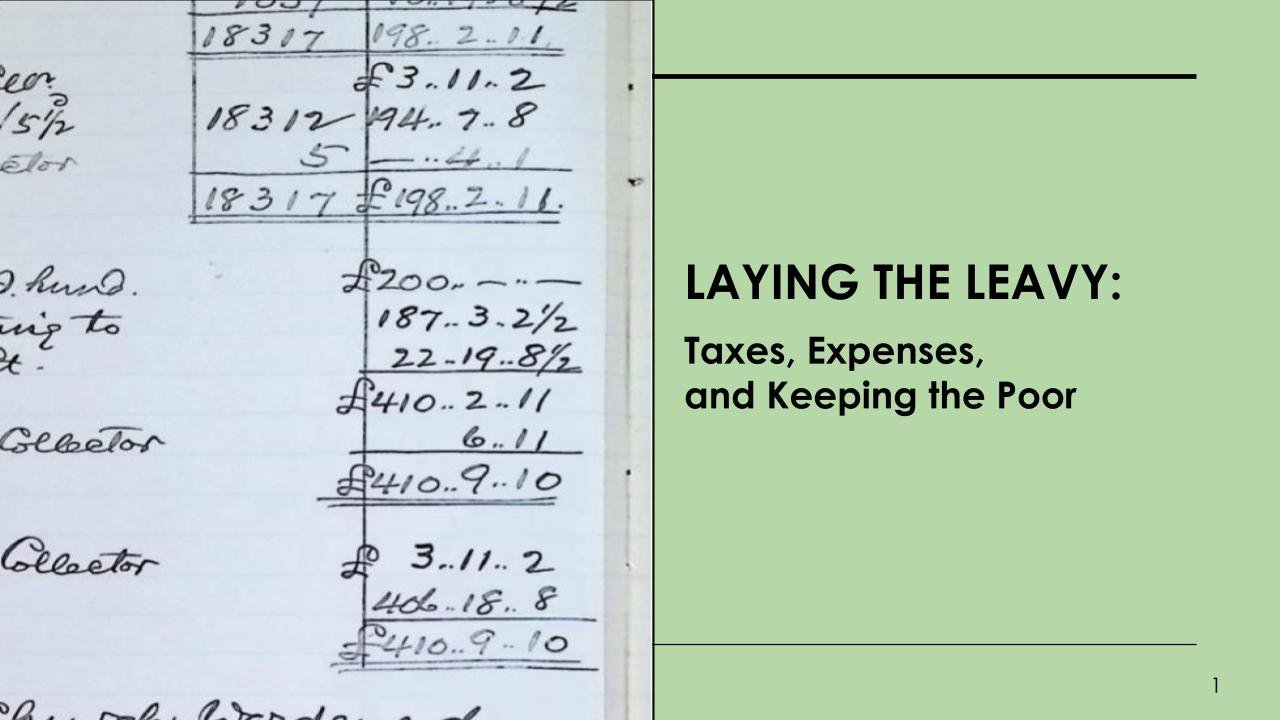
One of the most important roles of the vestry was to levy and collect taxes from parishioners in order to support the parish clergy, build and maintain parish churches and chapels, and help the parish poor. The vestry books show the process for each “laying of the leavy,” in which the vestry takes account of all expenses in the parish for the year and divides that amount by the number of tithables to determine the tax on each. Tithables were initially those over 16 years of age in the following categories: free males, male and female enslaved persons, and male and female Native American servants, with the taxes assigned to the enslaved and servants paid by the enslaver. The taxes were often levied in pounds of tobacco.
In the records, we see the kinds of expenses borne by the parish, from paying the minister, to paying for the wine and bread for communion, to paying a coffin maker or grave digger, or a doctor or midwife tending to specific individuals. Individuals are often referred to by name in relation to payments of wages (for clergy and chapel clerks, as well as cleaners and laborers), and payment of expenses related to keeping the poor. With respect to the latter, names are included for those compensated for housing, feeding, and caring for the orphaned, ill, infirm, and elderly, as well as for some of the individuals cared for. Prior to the creation of the federal census, church records are often the only place that the names of individuals who were not landowners, as well as women and girls, were recorded.
The above slideshow features examples of the abundant detail the “leavy” records contain about life in the colonial era; individuals in the parish; the maintenance and construction of church properties (including churches, chapels, schools, the home of the parish minister, and the “glebe farms” that supported the minister and his family); and the role of the parish as a crucial social services agency.
< Explore the Book < Laying the Leavy

Thank you to Virginia Humanities for supporting this project and to our partner the Diocese of Southern Virginia.