The Vestry Records of Elizabeth City and Lynnhaven Parishes
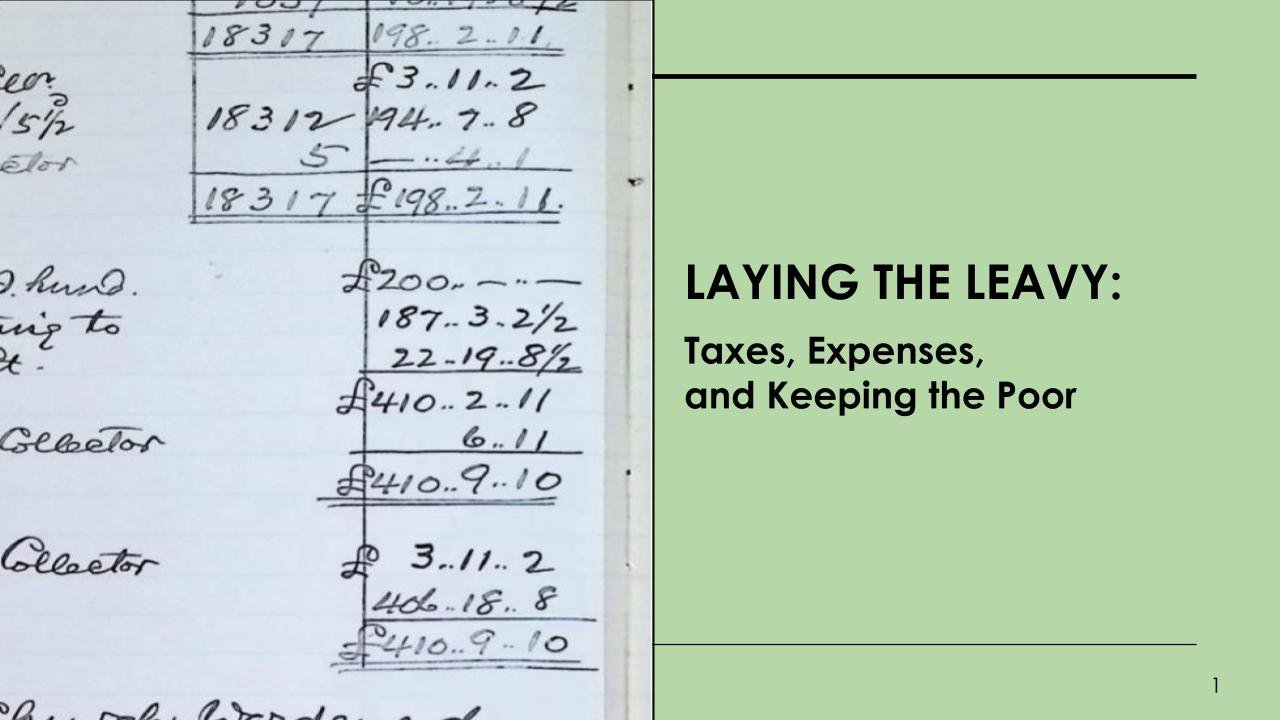
Laying the Leavy
1723 - 1831
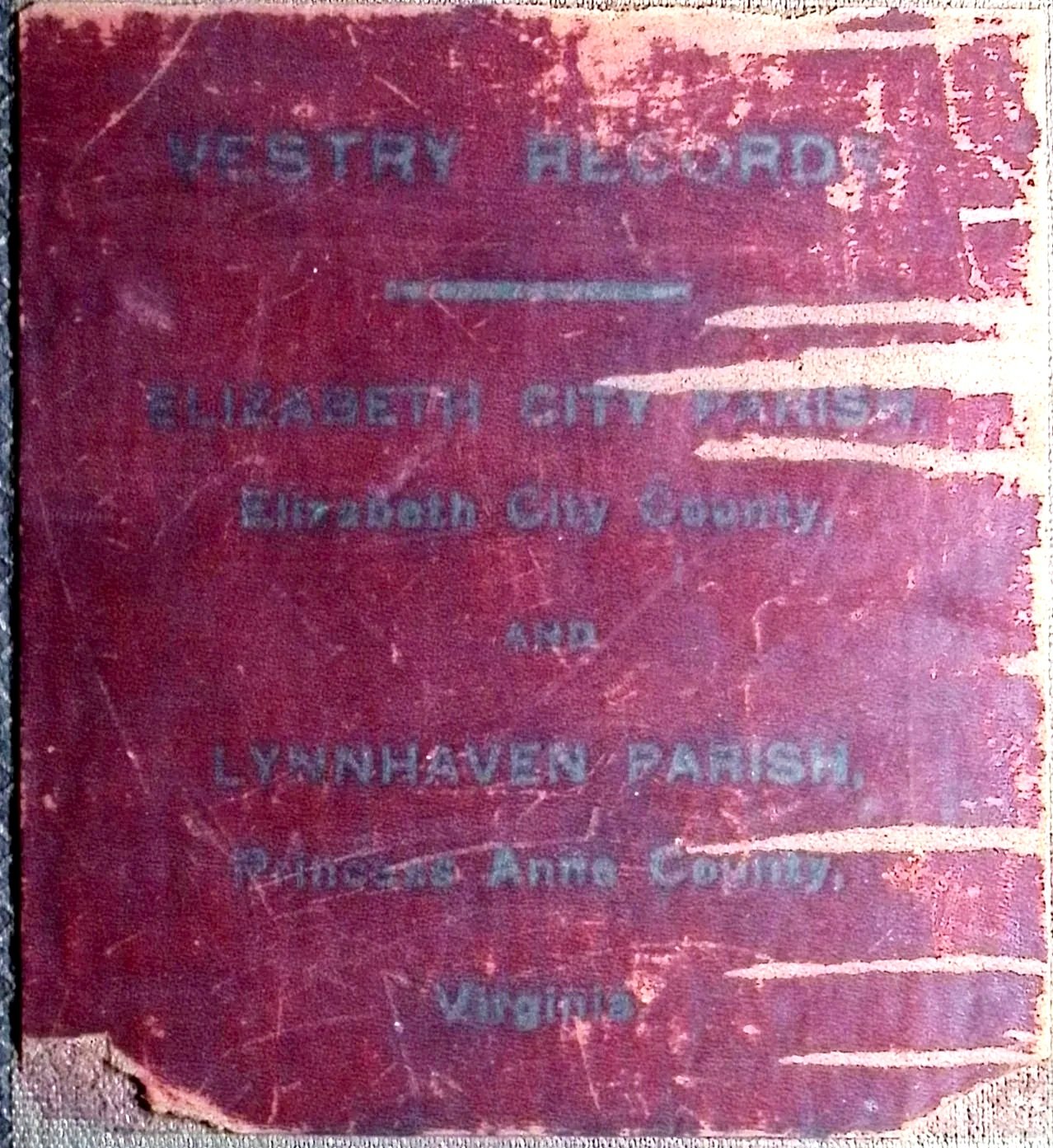
The vestry book is owned by the Diocese of Southern Virginia. All use of the digital copy of the vestry book and its contents, as well as this exhibit is governed by the Episcopal Project’s content policies which can be found here.
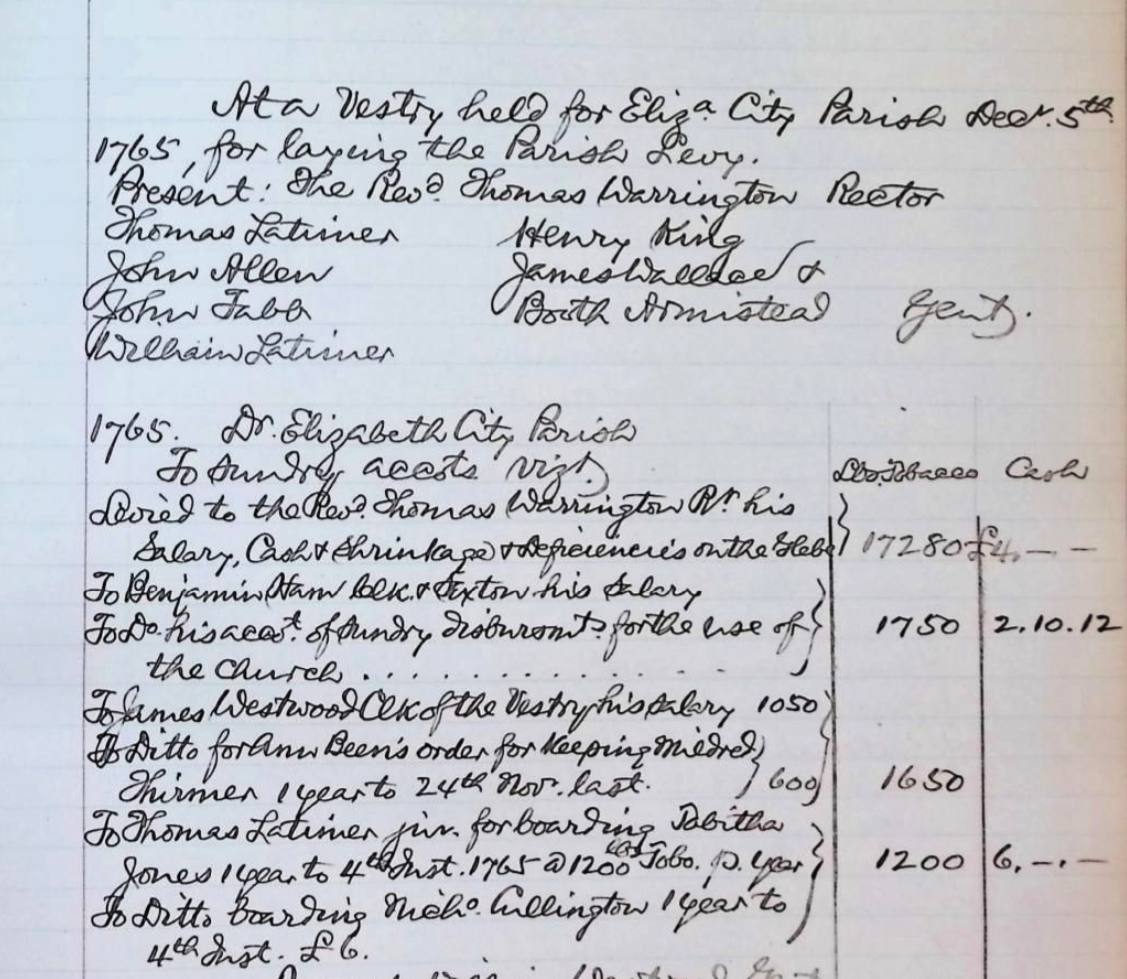
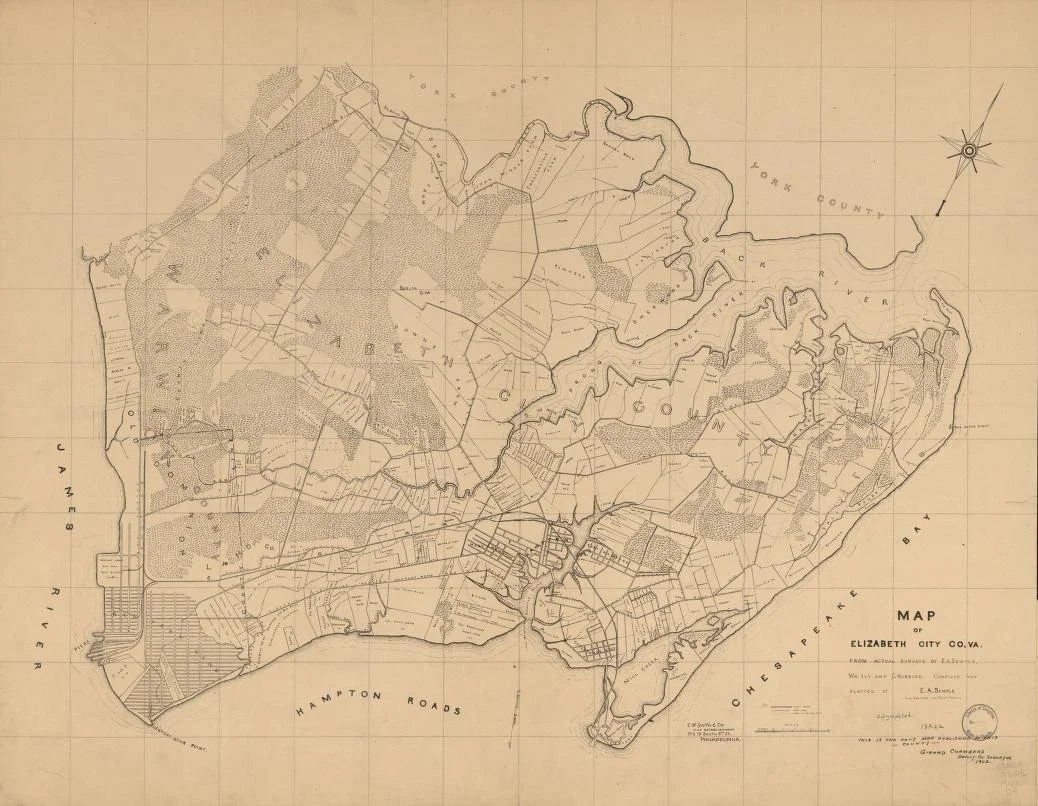
This exhibit explores the history of two Anglican parishes on the eastern coast of Virginia. Lynnhaven Parish* (contiguous with then-Princess Anne County) and Elizabeth City Parish (then containing all of the original county of Elizabeth City on the north side of the James River, i.e. today's Hampton Roads) were among the oldest and most populous areas of colonial settlement in Virginia.
Through exploring the Vestry Records of Elizabeth City and Lynnhaven Parishes, we learn about the everyday lives of citizens in the Revolutionary and Early National eras. This primary source provides a different lens on history, documenting the parishes’ people, work, and events from their original status as colonial Anglican parishes with the first English settlements in Virginia to becoming two early U.S. Episcopal parishes following the American Revolution.
Introduction
*The Lynnhaven Parish Vestry Book includes various spellings for Lynnhaven (e.g., Linhaven); the exhibit uses the contemporary spelling.
The Parishes
Elizabeth City Parish
Est. 1619
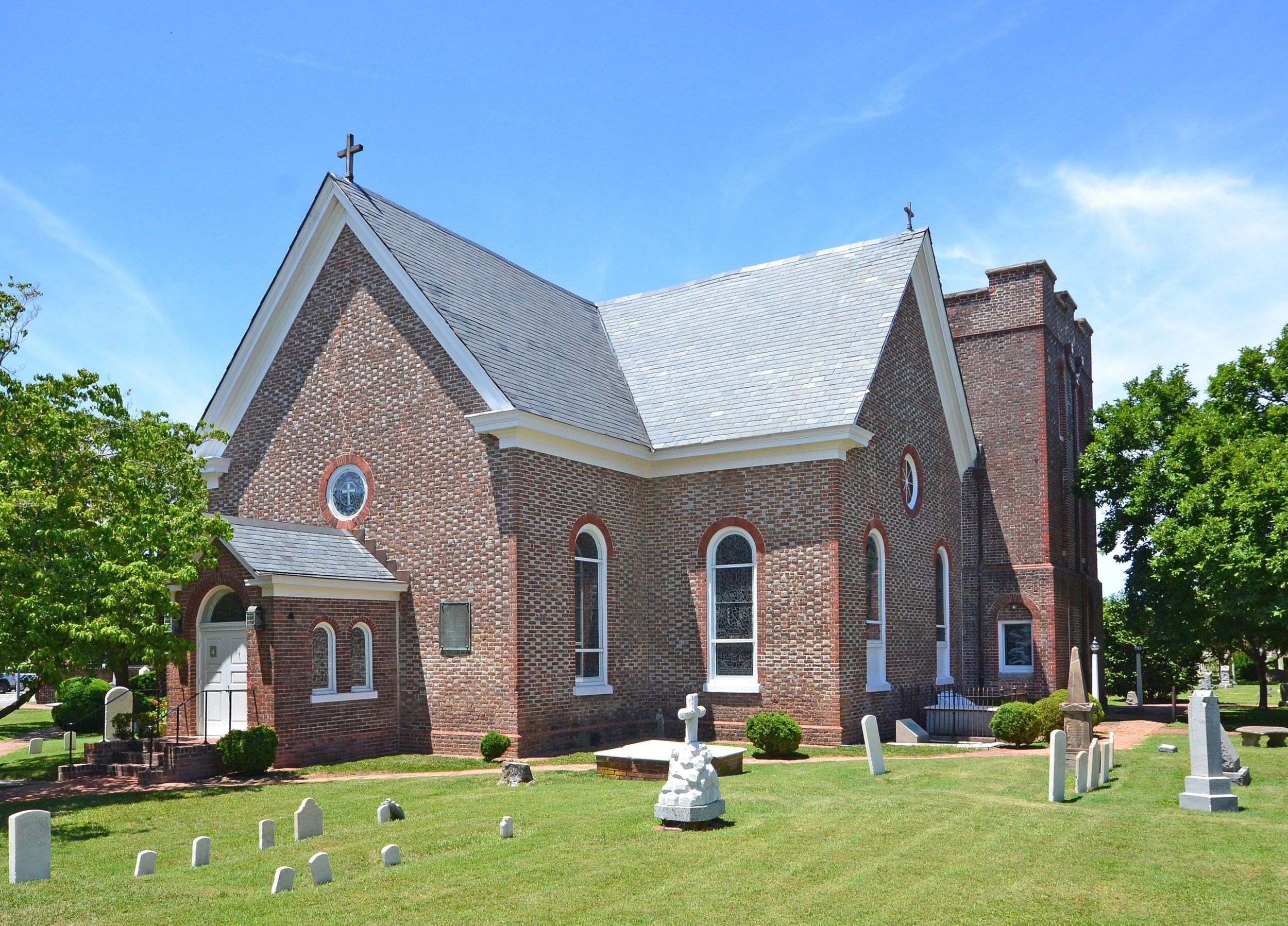
St. John’s Episcopal, Hampton, Virginia
Lynnhaven Parish
Est. 1643
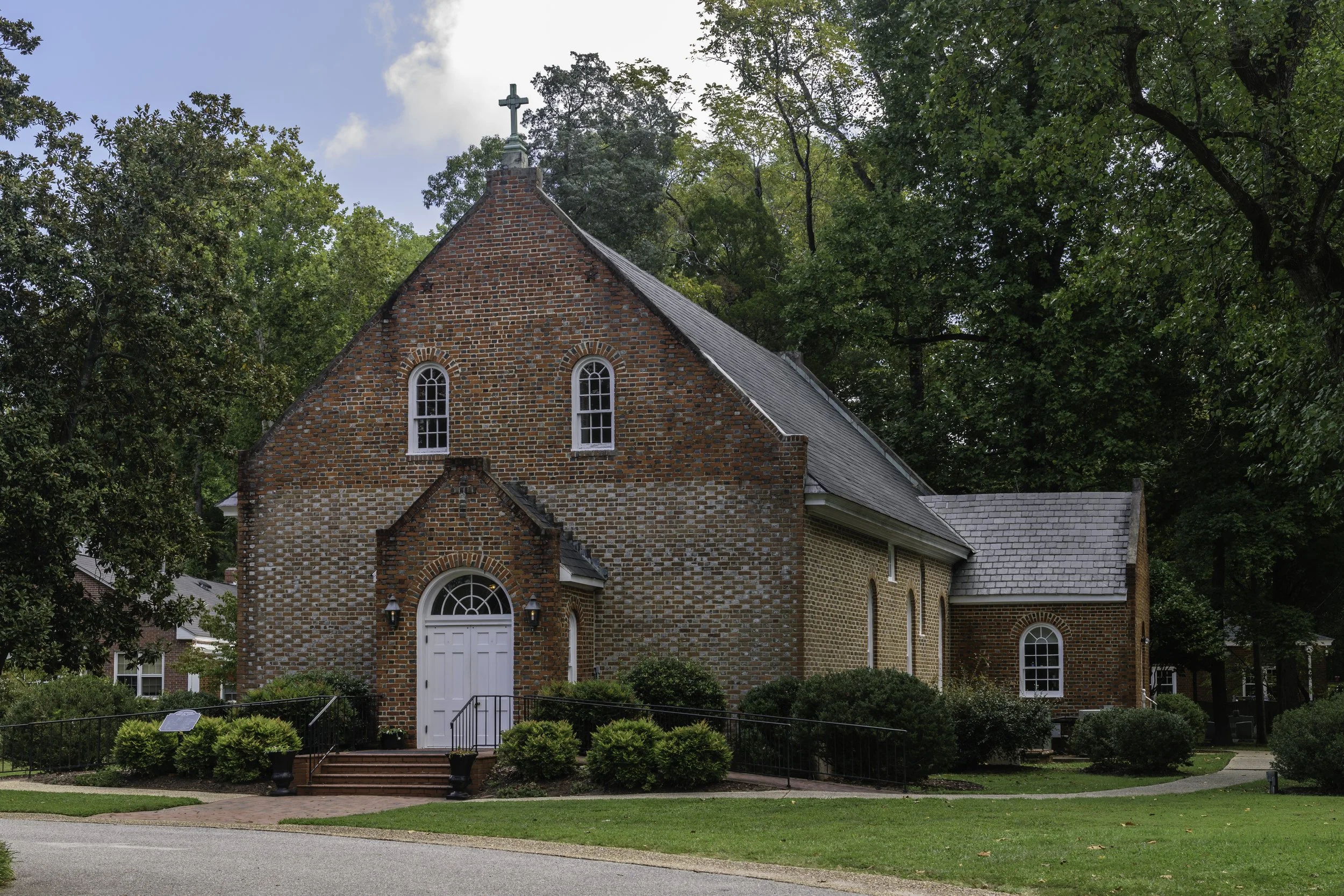
Old Donation Episcopal, Virginia Beach, Virginia
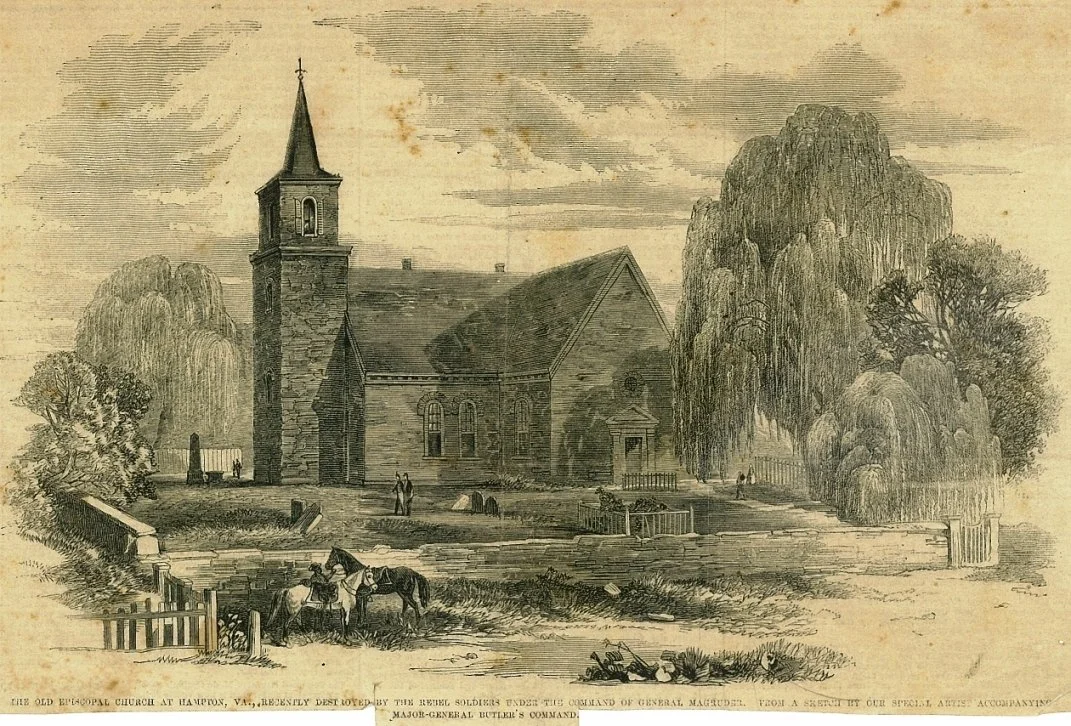
As the Encyclopedia of Virginia explains, “English settlers in Virginia introduced a parish system during the colony’s first few decades,” organizing the colony into smaller geographic territories known as parishes. A parish “in colonial Virginia was a unit of both civil and religious authority that covered a set geographical territory.” It contained a “central church and frequently two or more so-called chapels of ease in outlying areas.” (1)
From at least 1635 onward, the parish and clergy were overseen by a vestry of laymen (typically 12, serving lifetime appointments), whose responsibilities included executing the parish’s governmental functions. In 1641, for example, the General Assembly assigned vestries the responsibility for laying the leavy,(2) collecting substantial taxes that supported not only the parish priest and church facilities but also the parish’s poor, orphaned, elderly, and ill.(3) The vestries also oversaw the distribution of these funds, and thus the parish’s work as “the largest and most effective social welfare agency” in the colony at that time.(4) The Vestry Books thoroughly document this work in the Lynnhaven and Elizabeth City parishes.
The vestries were also responsible for:
Administering the periodic counting of every tobacco plant in the parish, as required by an act of the assembly instituted “for the better & more Effectual Improving of the Staple of Tobacco”; and
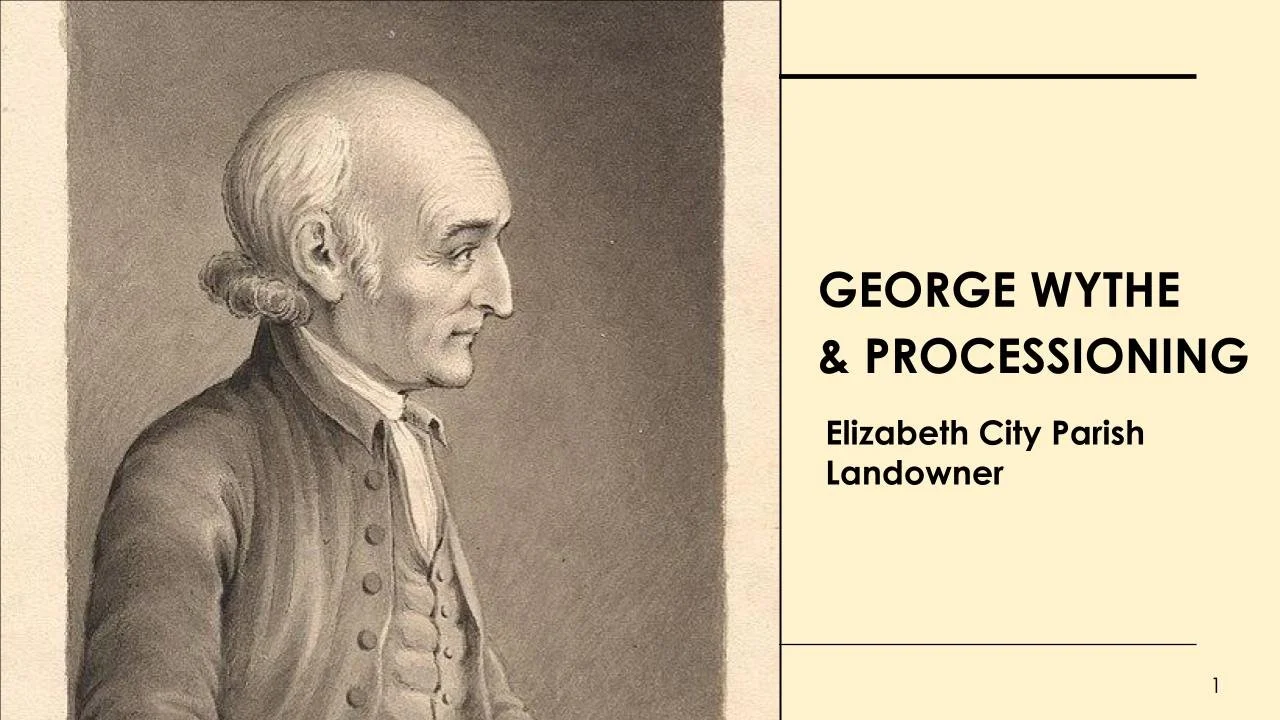
Quadrennially “Processioning the Boundaries,” as directed by the county court, to clarify or confirm the boundaries between landowners’ properties, and adjudicating boundary disputes within the parish. This duty was documented in the vestry books that are the focus of this exhibit, and examples of this work can be found in the George Wythe exhibit.
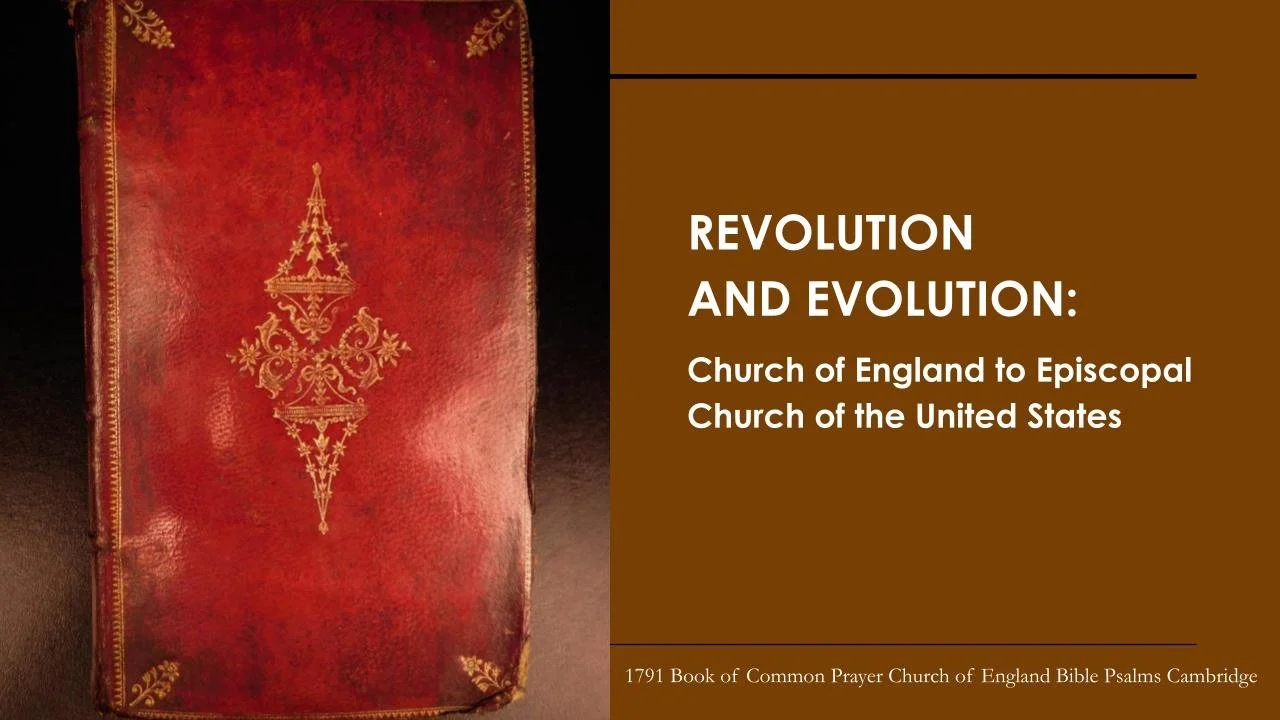
After the disestablishment of the Church of England in the former colonies in 1784 and the upheavals of the Revolution, the role of the church and vestry changed. The newly formed Protestant Episcopal Church of the United States replaced the Church of England, vestries dissolved and reconstituted, new oaths were taken to the Protestant Episcopal Church, and the vestries became less involved in social services as the separation of church and state was implemented.
1 Bond, Edward. "Parish in Colonial Virginia, The" Encyclopedia Virginia. Virginia Humanities, (07 Dec. 2020). Web. 25 Mar. 2026
2 The Vestry Books use several different spellings but “leavy” is used throughout the exhibit unless citing a direct quote with an alternate spelling.
3 Bond, Edward.
4 Bond, Edward.
Role and Organization of the Parish and Vestry
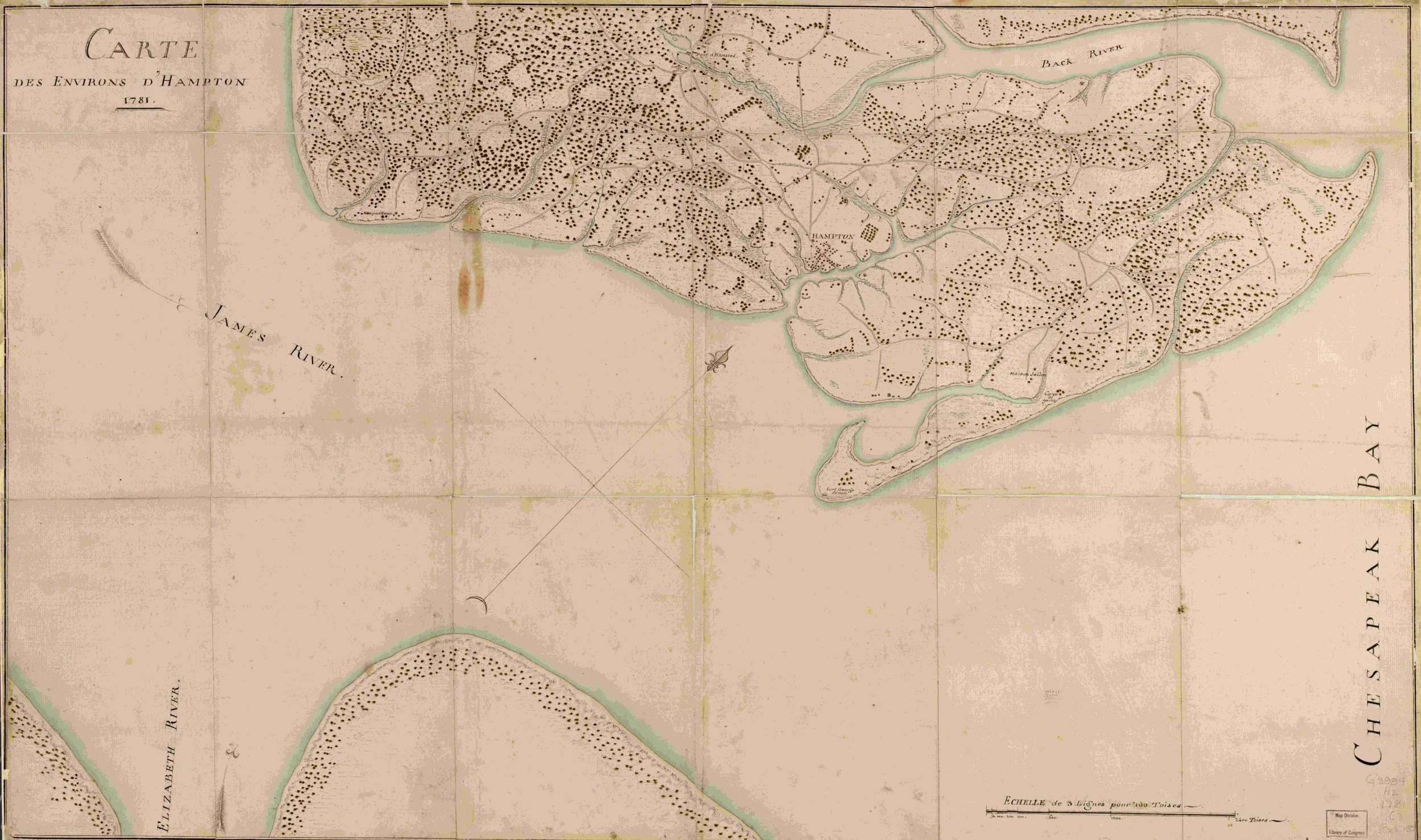
As a record of Vestry and Parish activity, the Vestry Books are replete with examples of two major Vestry functions: the levying of taxes, and “processioning,” or marking land boundaries. Through the books, it is also possible to trace the lives of individuals in the parishes, the growth of the parish population, the construction of new churches, and the evolution of the Anglican Church as the established church in Virginia to its disestablishment following the Revolution to the resulting creation of the U.S. Episcopal Church. The book documents the most destitute members of the parishes to prominent members of the first families of Virginia, including George Wythe, signer of the Declaration of Independence and a landowner in Elizabeth City.
Explore the Book
Explore the full text of the Vestry Books here or select a link below to learn more about specific topics:

Thank you to Virginia Humanities for supporting this project and to our partner the Diocese of Southern Virginia.