Laying the Levvy
Processioning
1. Processioning
Processioning is akin to the process of surveying land, noting land owners and confirming boundaries for the purpose of taxation? serving as court records in disputes or land transfer. In Virginia, the 1662 act required that landowners' goe in procession" once every four years to walk and renew the property lines. Parishes were broken into precincts by a court order 1763, [possibly due to increased land owners and ownership]. Persons who walked the boundaries were called processioners. The vestry assigned processioners to parish precincts, and those processioners would walk the property boundaries with the landowner/s, and redraw any disputed or changed lines. Prior to the revolution, this process taken care of by the vestry, was actually served the courts who had ultimate decision in any disputes.
After the revolution, processioning and surveying ?
Page 81 in book, Page 89 in Archive
This page of the Vestry Book shows the land of George Wythe who lived in Hampton at this time period, and lived very near to Syms's Free School.In the pages below, you can see the order to procession, who was to do the processioning, what precincts, when the report was due, and other interesting things. Land Processioning in Colonial Vahttps://www.jstor.org/stable/1919985
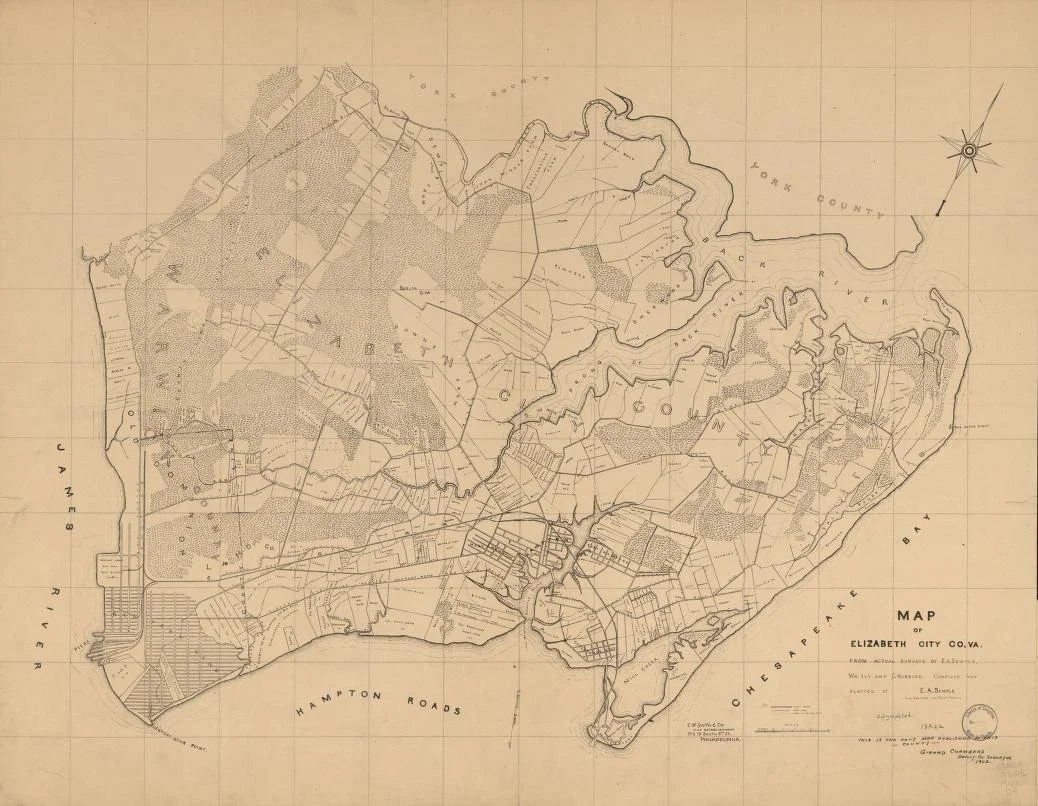
Images 1 & 2: The Elizabeth City Vestry Book begins in 1759 with two pages of oaths to Church of England (1759-1771).
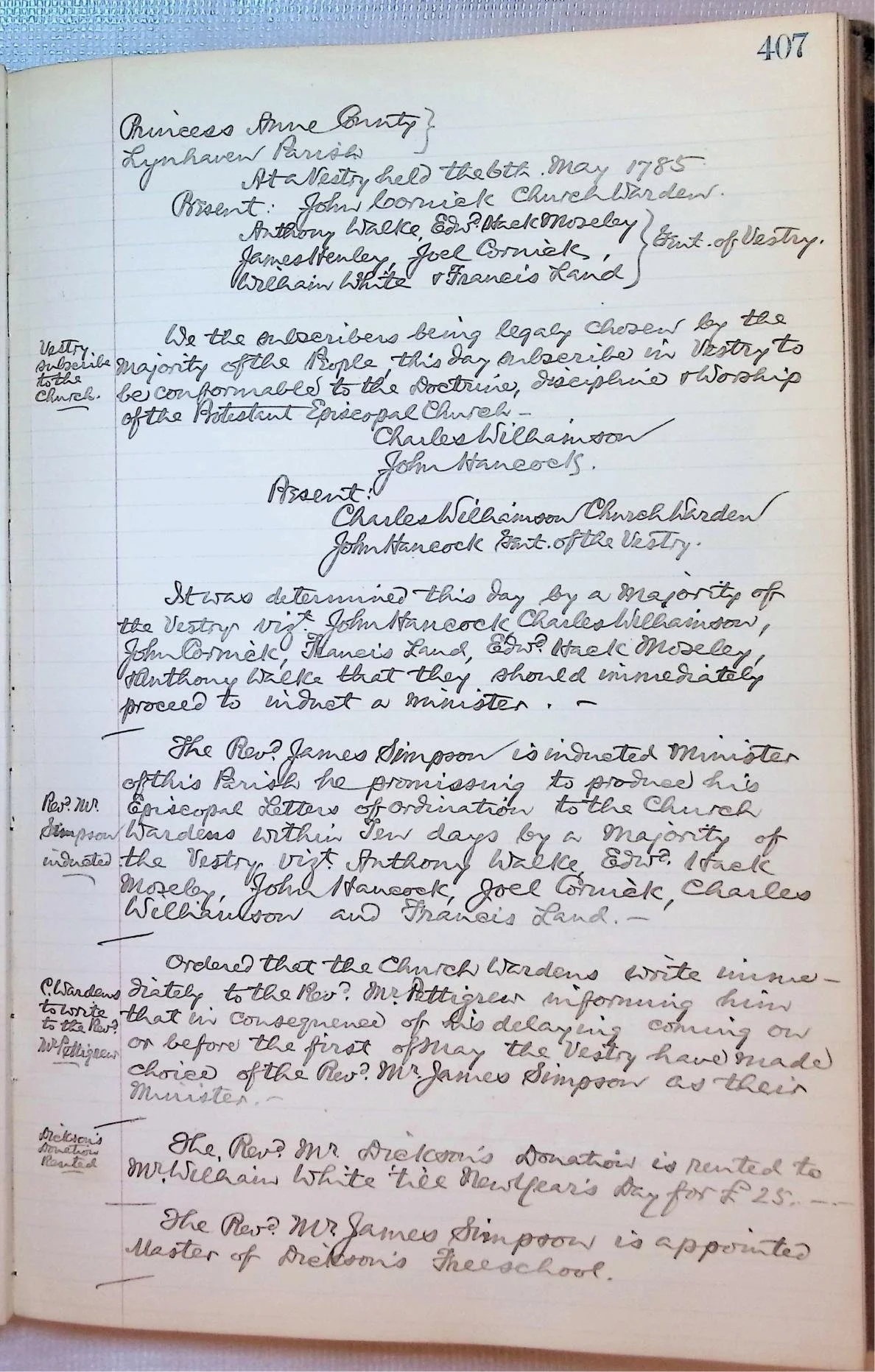
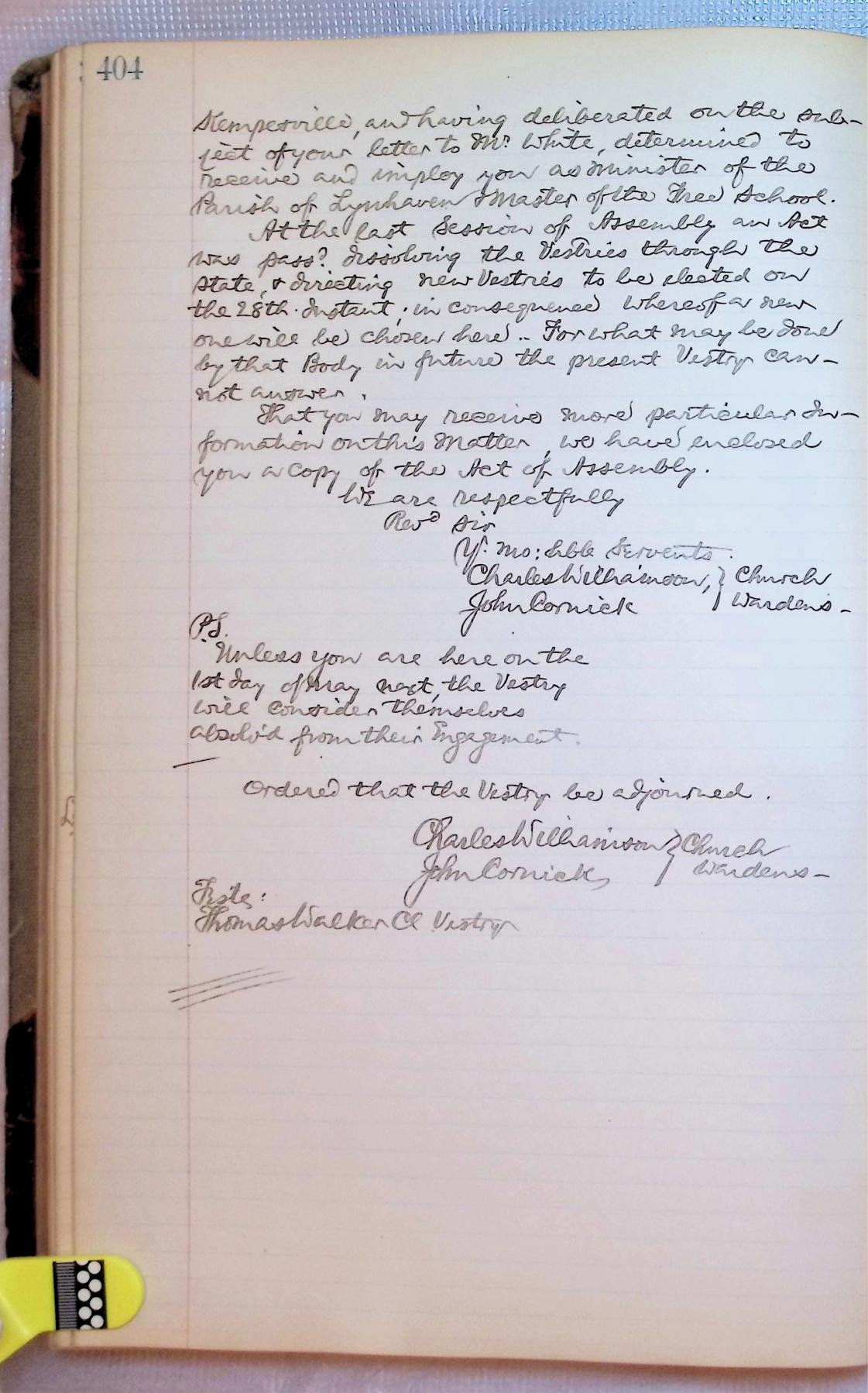
Image 3: On April 14, 1785, the Lynnhaven vestry reacts to a recent act passed by the general assembly to xxx. and the vestry takes an oath to the PEC and makes an accounting of the items now owned by their church.
In January 1786, Va passes the Va Doctrine on Religious Freedom.
There is an example of a lottery: an oath to fundraise to the dilapidated Hampton Church now called St. John’s. 1826
In July 1792, John McClennan renounces the principles of the Roman church.
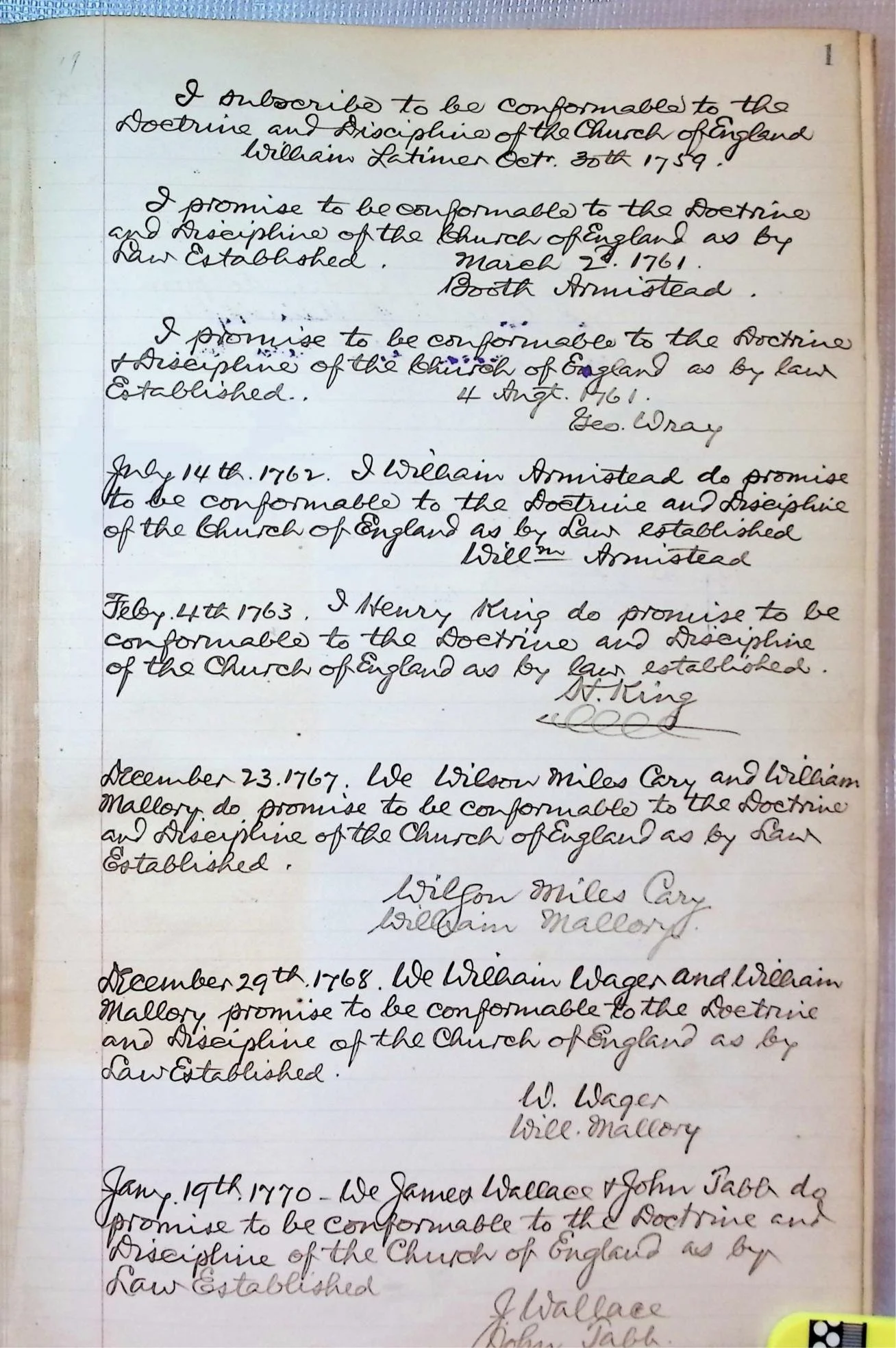
Image 1: Elizabeth City Vestry Book, 1759
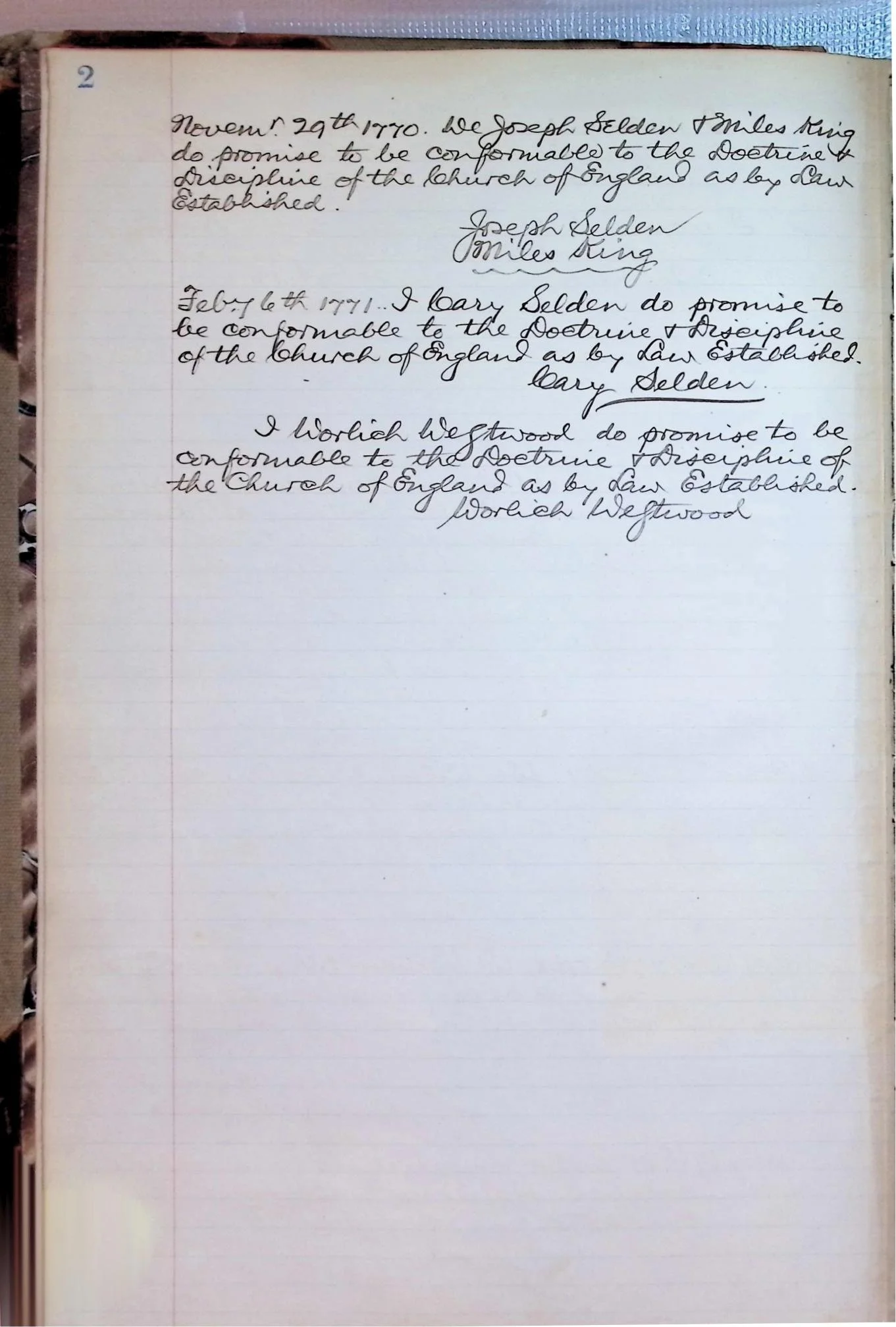
Image 2: Elizabeth City Vestry Book, 1771
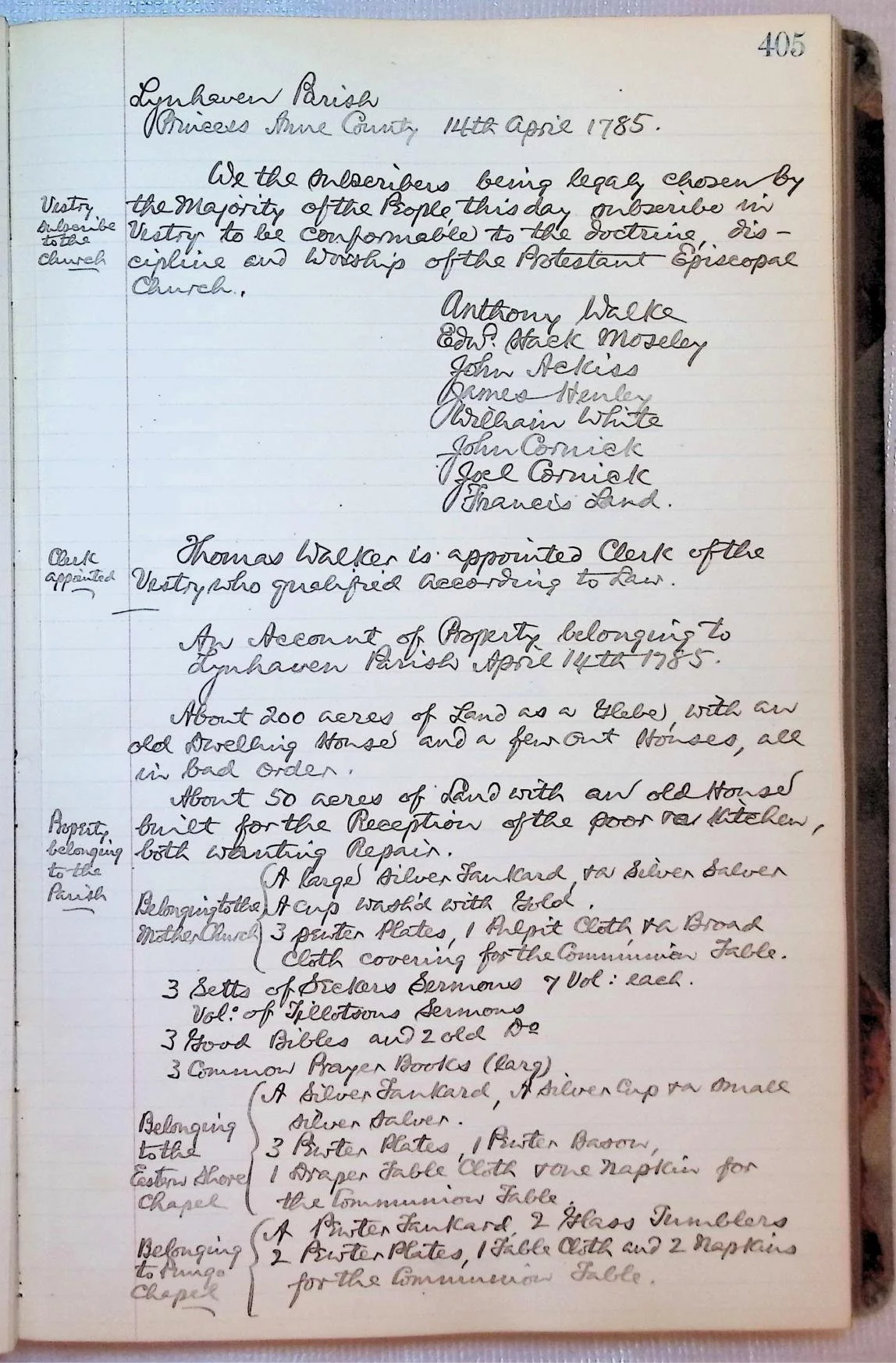
April 14, 1785. Vestry reacts to the dissolution of previous vestries by the General Assembly and reestablishes Protestant Episcopal vestry.
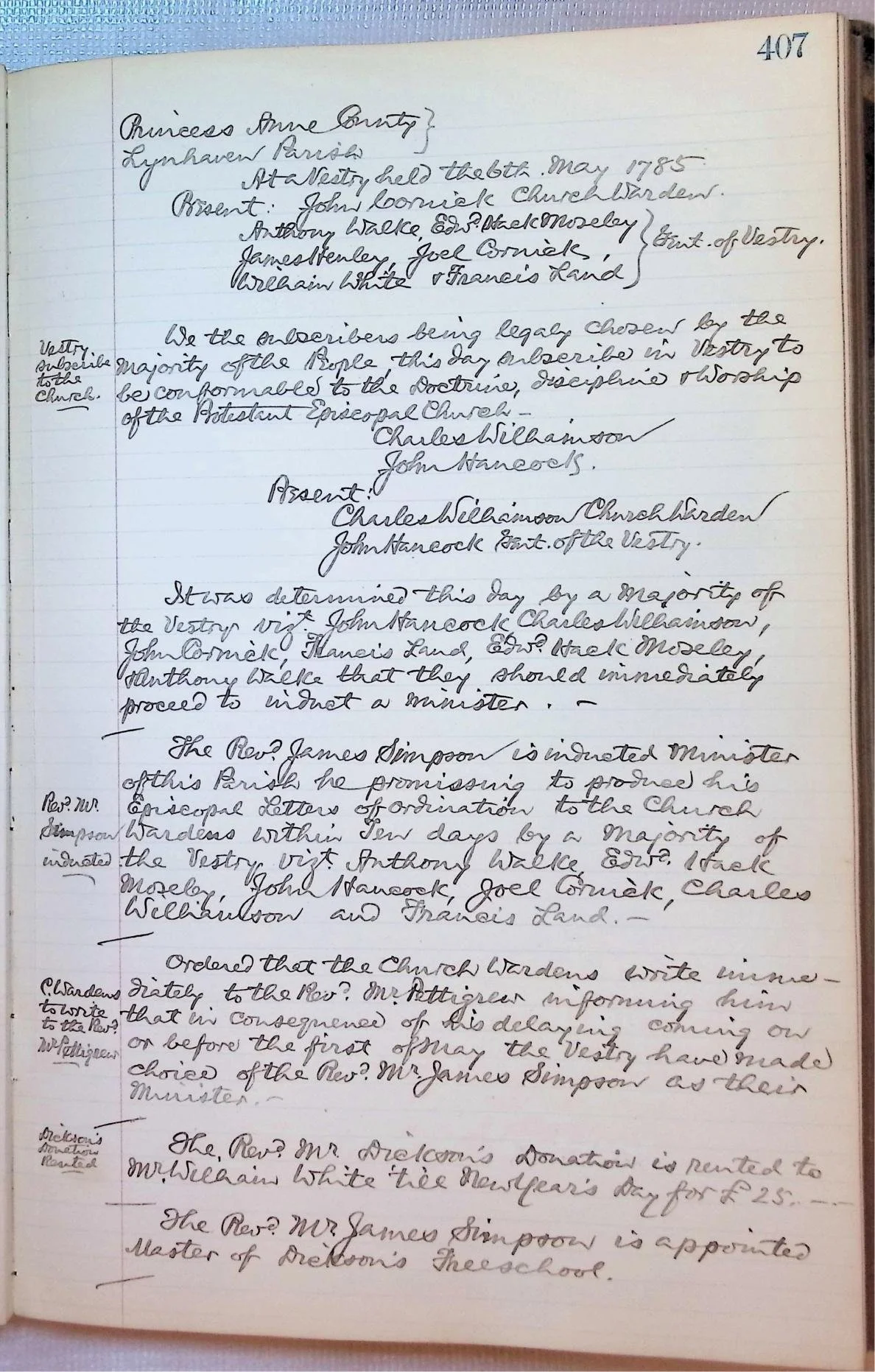
April 14 1785, p. 2: note the passage (?) in Assembly of an order to dissolve existing vestries and re-elect new vestries.
April 14, 1785, pg 2. New minister to produce his Episcopal Letters of Ordination to the Church Wardens.
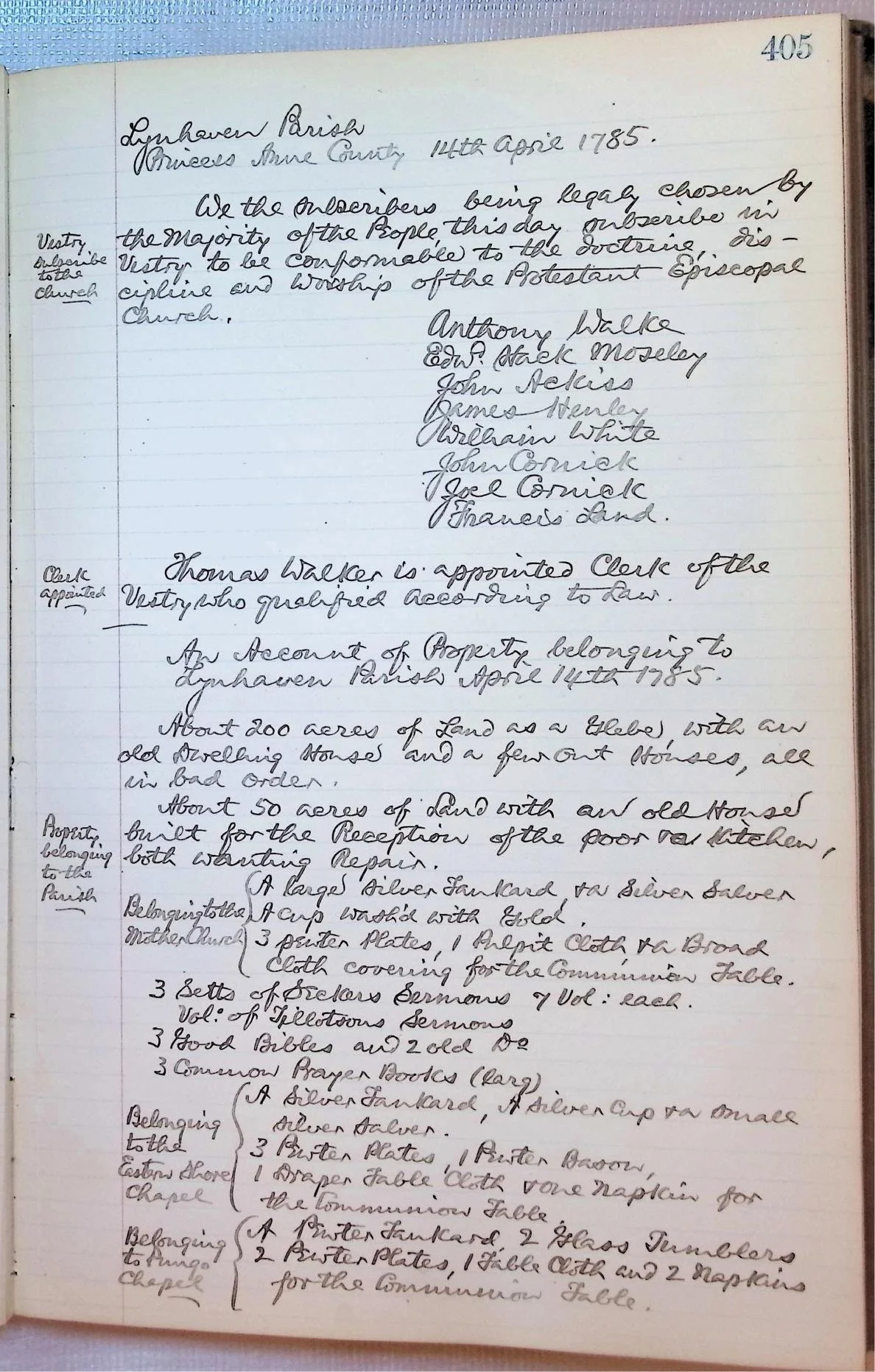
April 14 1785. Vestry subscribes to the Protestant Episcopal Church and make an account of the property.
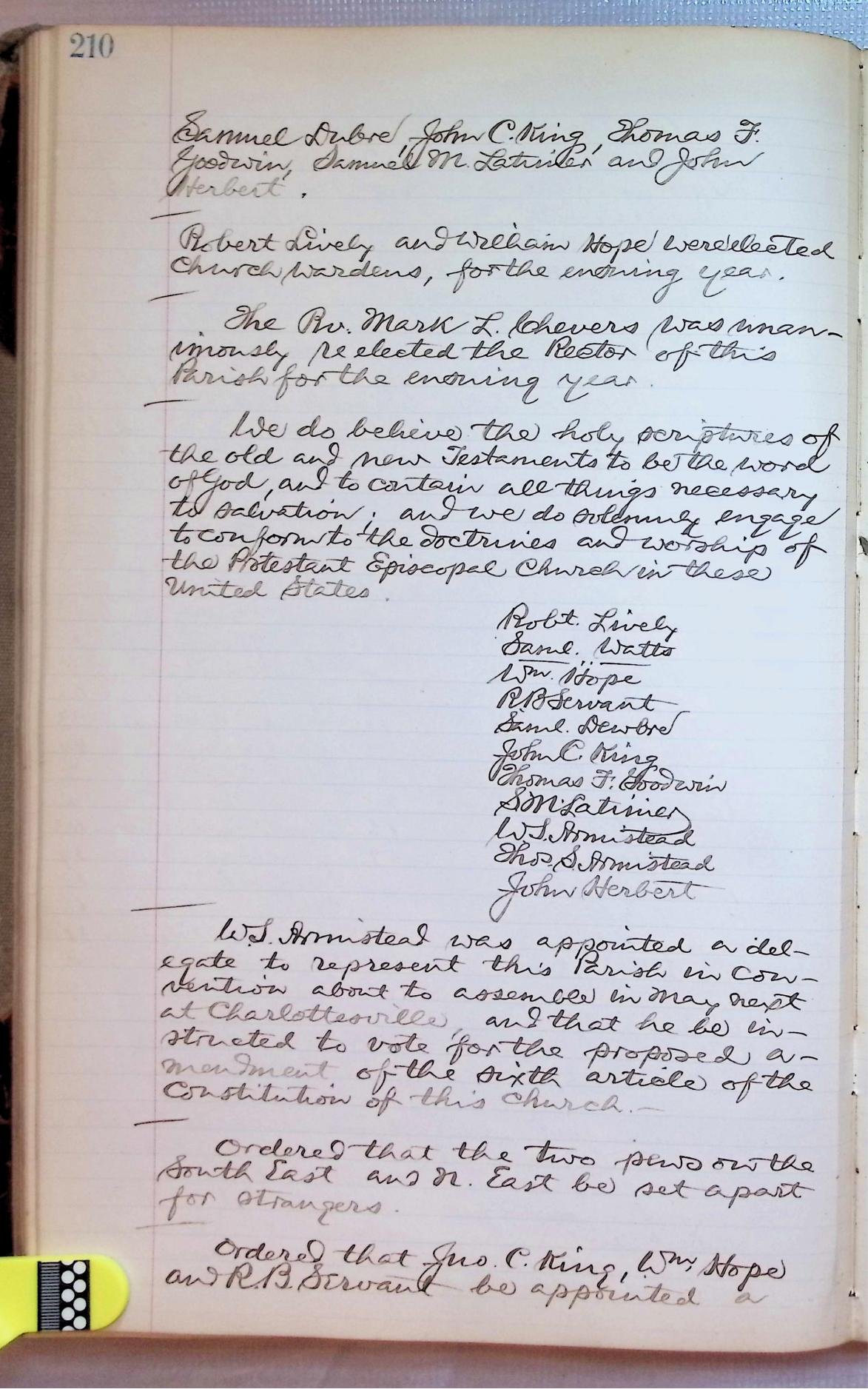
END: Eliz City 1826, post St. John's Page 210, We conform,
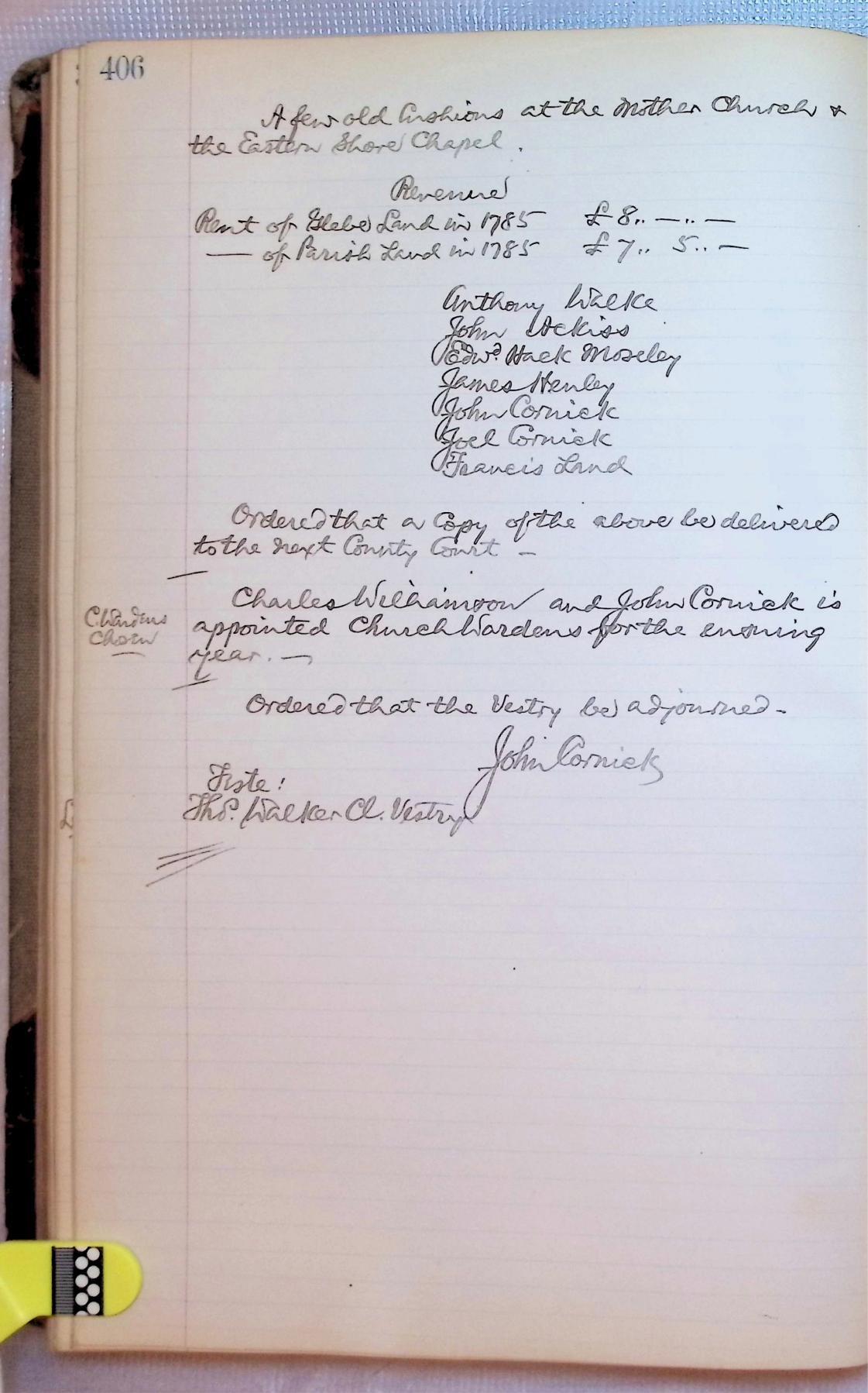
New minister subscribes to the PE church and deputies are appointed to go to the convention in Richmond.