

Laying the Leavy
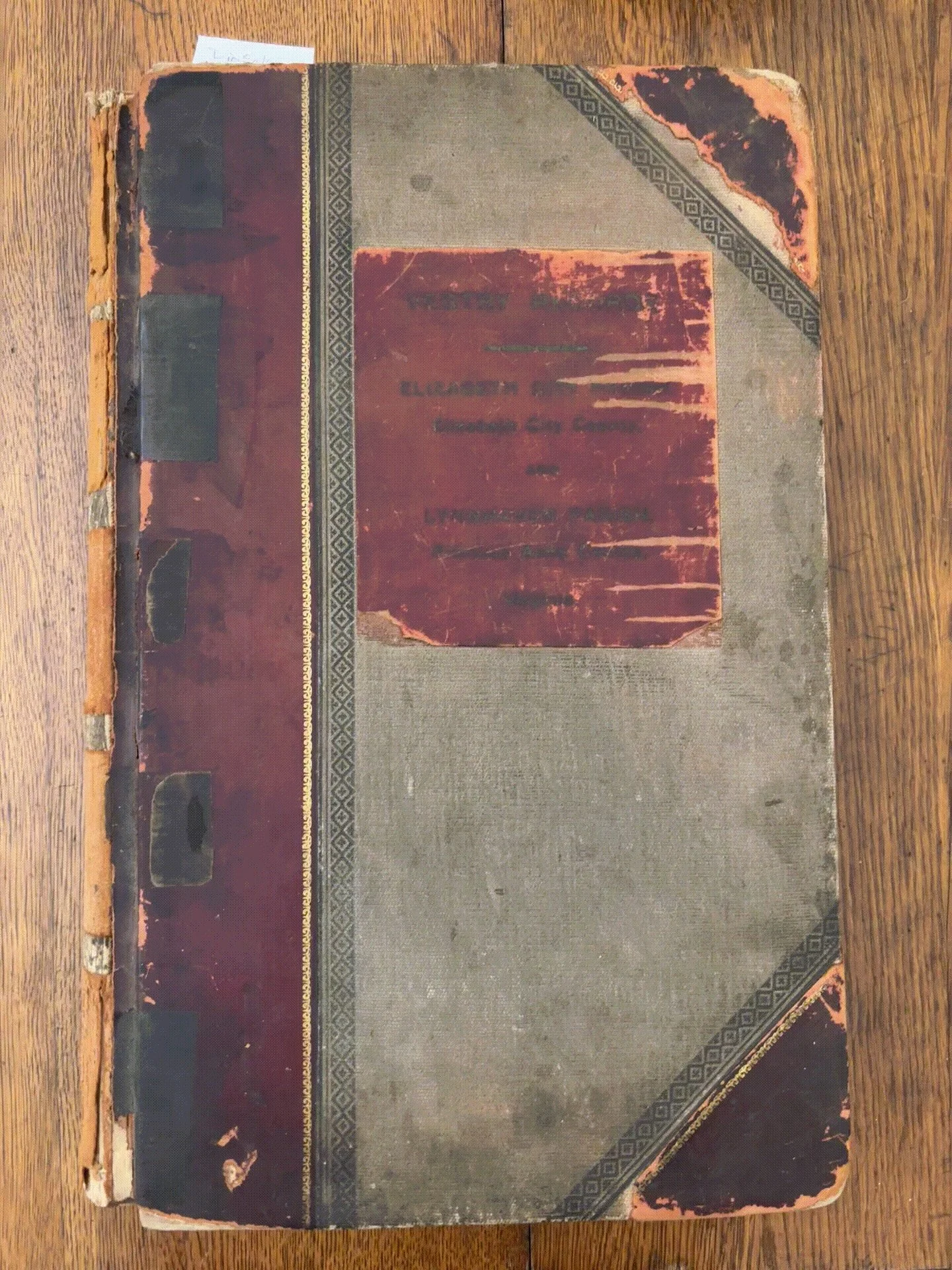
The Vestry Records of Elizabeth City and Lynnhaven Parishes
1723 - 1831
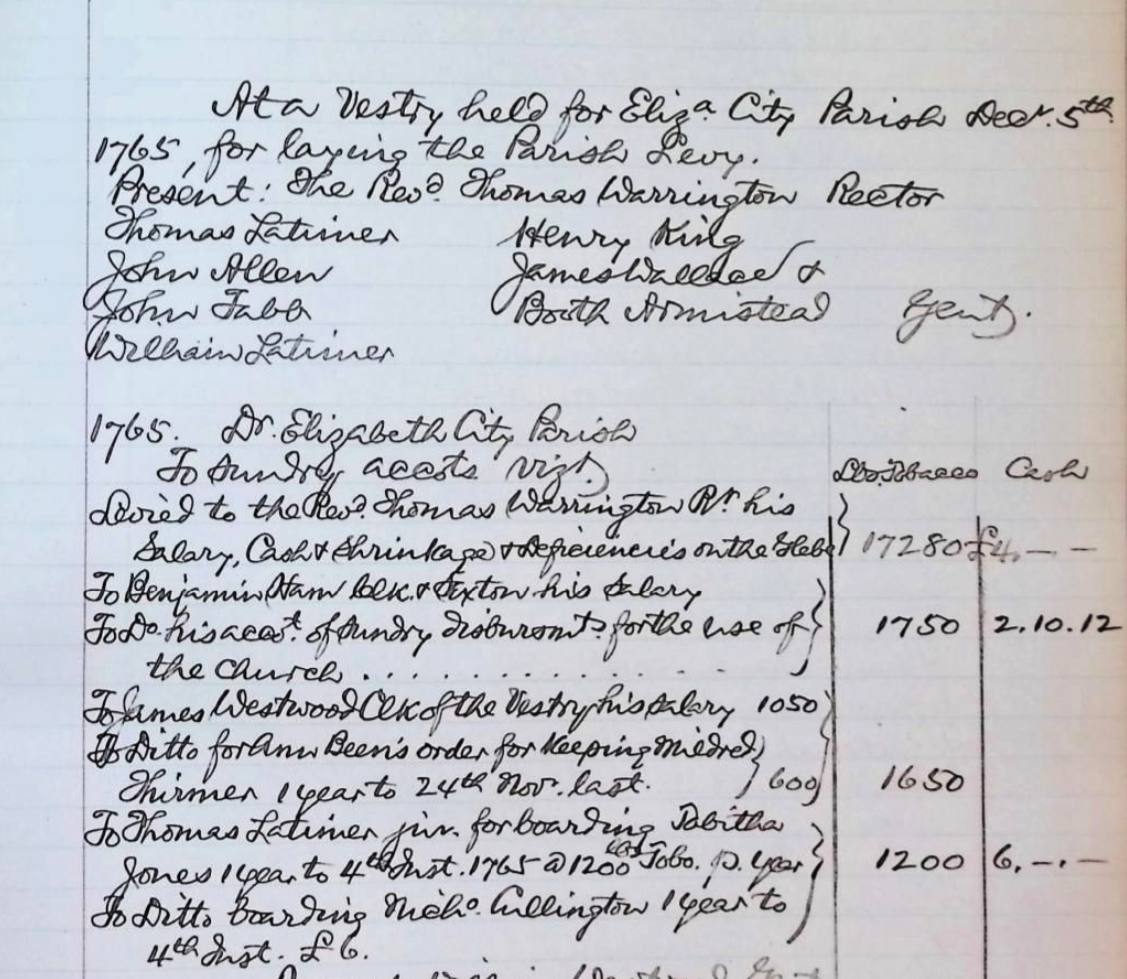
This exhibit explores the history of two Anglican parishes on the eastern coast of Virginia. Lynnhaven Parish (contiguous with then-Princess Anne County) and Elizabeth City Parish (then containing all of the original county of Elizabeth City on the north side of the James River, i.e. today's Hampton Roads) were among the oldest and most populous areas of colonial settlement in Virginia.
The Book
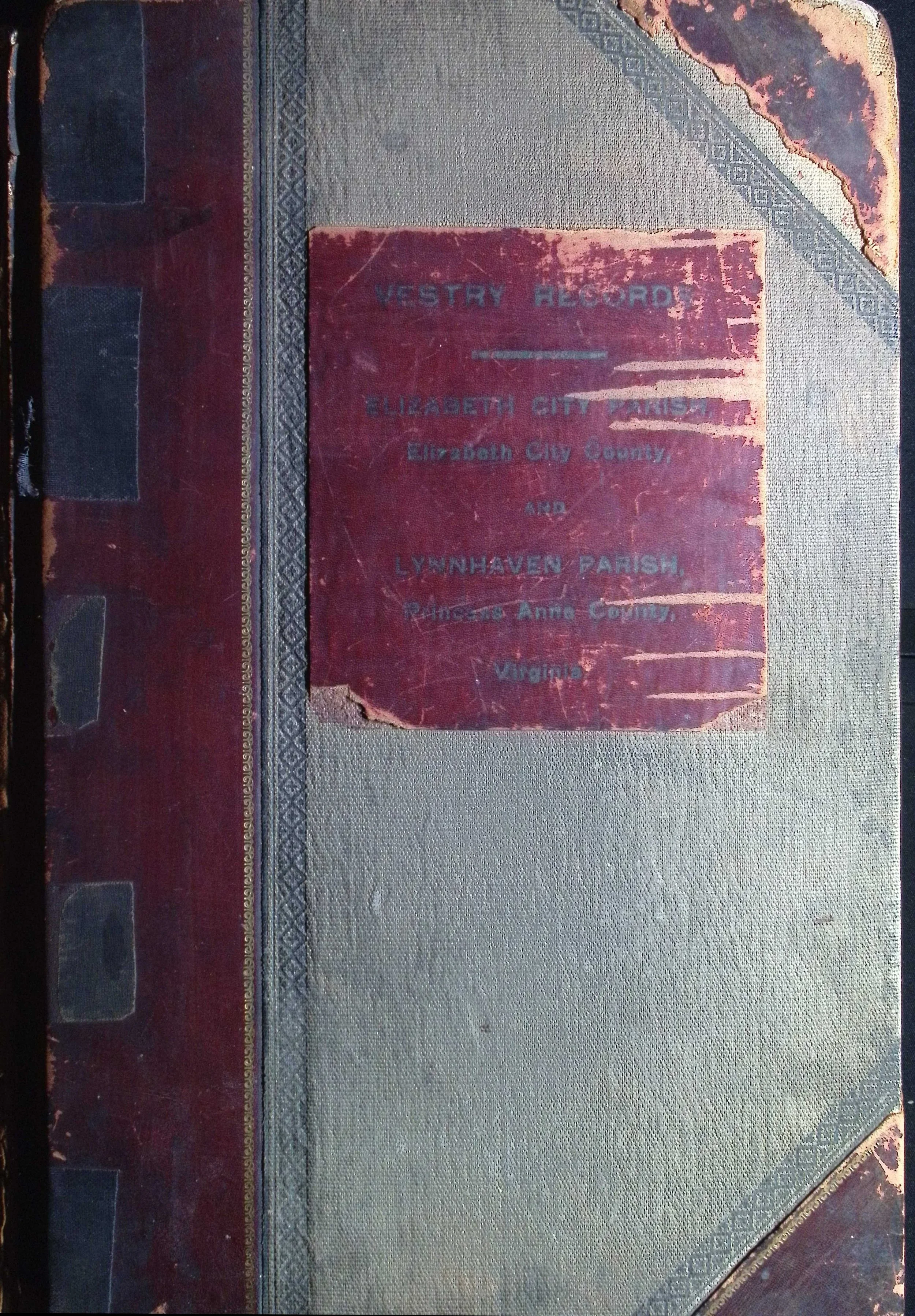
The Vestry Records Elizabeth City Parish (Elizabeth City County) and Lynnhaven Parish (Princess Anne County), VA pictured on the left is a handwritten copy of two original vestry books which are now lost. The 500+ page copy was made in 1906 by order the Diocese of Southern Virginia.
The Lynnhaven Parish (est. pre 1643) portion of the book covers 1723 to 1829, while Elizabeth City Parish, established in 1619, covers 1759 through 1831.
The Episcopal Project was asked by the Diocese of Southern Virginia to digitize this artifact. Support from Virginia Humanties made this project possible.
This primary source adds details about the everyday lives of citizens in the Revolutionary and Early National eras and provides a different lens on history, documenting the parishes’ people, work, and events from their original status as colonial Anglican parishes with the first English settlements in Virginia to becoming two early U.S. Episcopal parishes following the American Revolution.
Lynnhaven Parish was established in 1640. Originally, the parish included the whole of Princess Anne County. This county had origins in the early corporation of Elizabeth City, one of the four 'ancient boroughs' which, together with the Eastern Shore settlement, comprised the colony in 1618. In 1634, the colony was divided into 8 shires/counties. The first vestry for EACH PARISH was appointed at county court sessions of July and August 1640. In 1642 the boundaries of Lynnhaven Parish were set by an Act of Assembly.
Lynnhaven Parish
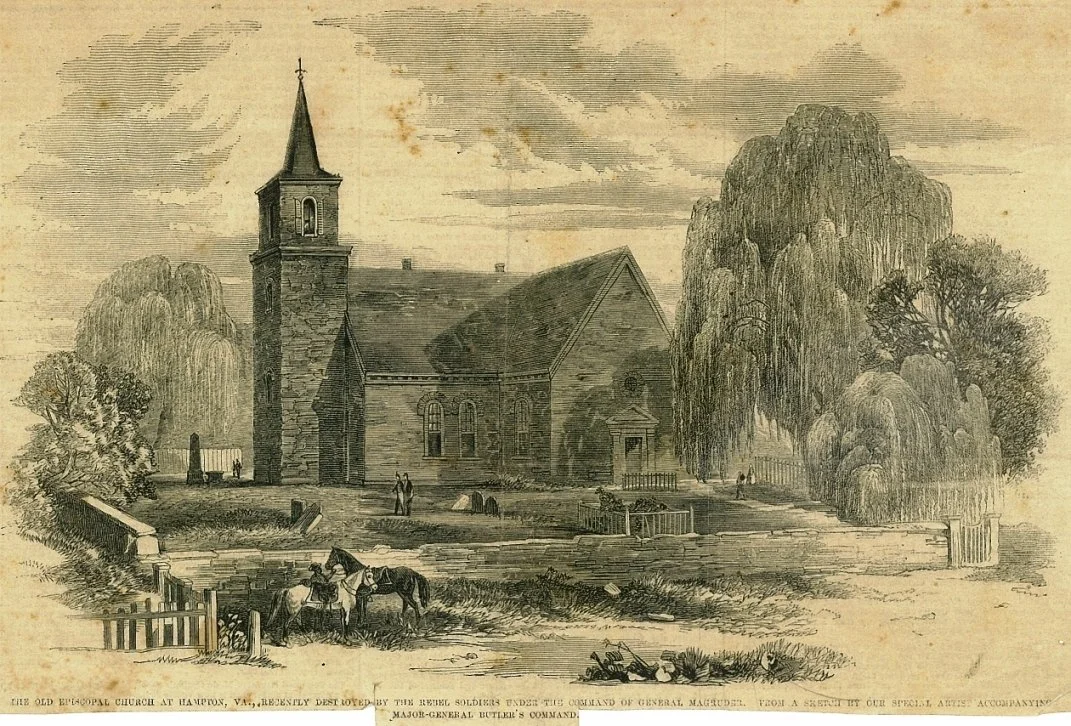
Elizabeth City Parish is perhaps the oldest parish in the New World. It was founded in 1610, when settlers from Jamestown moved seven miles to the north, took the town of Kecoughton from the Kecoughtan Indians, and founded a house of worship. In 1619, one of the first acts of the first meeting of the House of Burgesses was to change the name of Kecoughtan to Elizabeth City. Today it is known as Hampton. The mother church in Elizabeth City Parish is now called St. John's Episcopal Church.
Elizabeth Cittie Parish
The Role of the Vestry
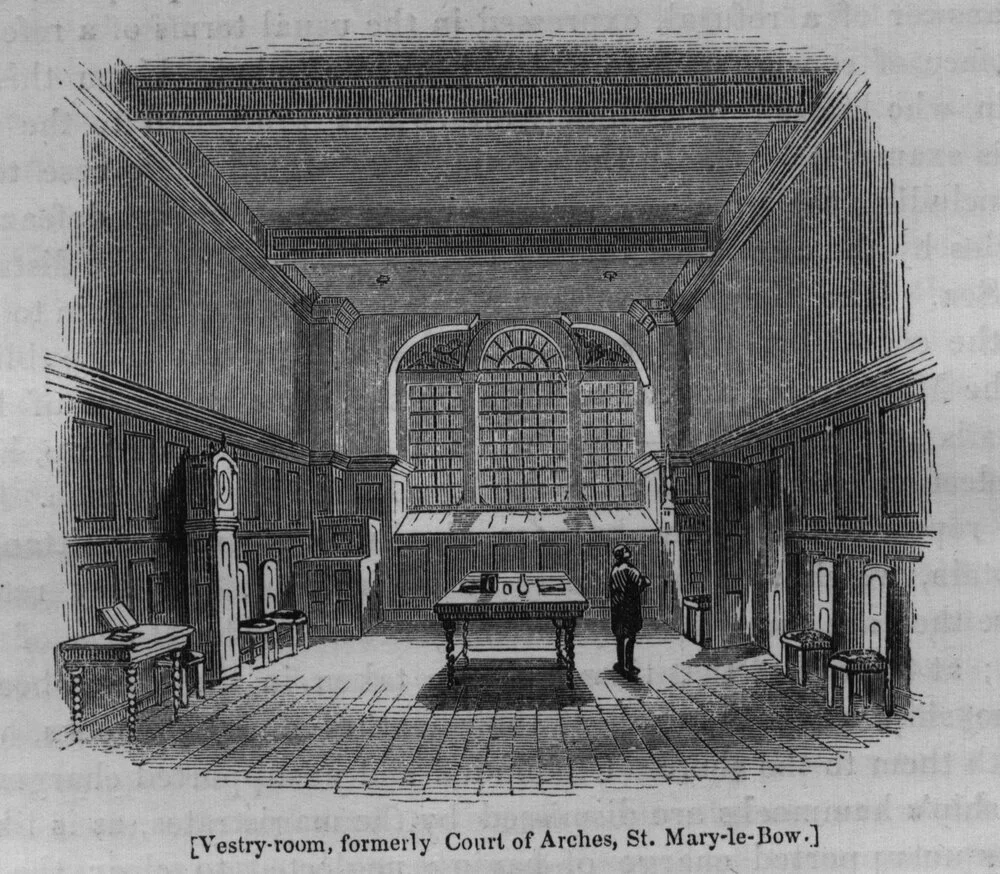
In the colonial, Revolutionary, and post-Revolution period, the church parish, overseen by a Vestry, was an essential element of geographic organization and governmental administration in Virginia. In addition to being a community of worship, before the disestablishment of the Church of England in the former colonies in 1785-1786, the parish was a quasigovernmental entity and a robust social services agency, whose Vestry executed duties including: 1) Quadrennially “Processioning the Boundaries,” as directed by the county court, to clarify/confirm the boundaries between landowners’ properties, and adjudicating boundary disputes within the parish; and 2) levying and collecting taxes (in pounds of tobacco) to support parish clergy, construction and maintenance of parish churches and chapels, and parish poor.
HOW IT WORKS
[From Glossary of Terms]
The vestry is the legal representative of the parish with regard to all matters pertaining to its corporate property. The number of vestry members and the term of office varies from parish to parish. Vestry members are usually elected at the annual parish meeting. The presiding officer of the vestry is the rector. There are usually two wardens. The senior warden leads the parish between rectors and is a support person for the rector. The junior warden often has responsibility for church property and buildings. A treasurer and a secretary or clerk may be chosen. These officers may or may not be vestry members. The basic responsibilities of the vestry are to help define and articulate the mission of the congregation; to support the church’s mission by word and deed, to select the rector, to ensure effective organization and planning, and to manage resources and finances. Today’s vestry evolved from the colonial pattern.
Popular

2025
New York
The Atlast Project →
“Communication was top-notch and the final outcome was even better than we imagined. A great experience all around.”
Former CustomerGet In Touch
If you're interested in working with us, complete the form with a few details about your project. We'll review your message and get back to you within 48 hours.