
Laying the Leavy Exhibit > George Wythe
George Wythe
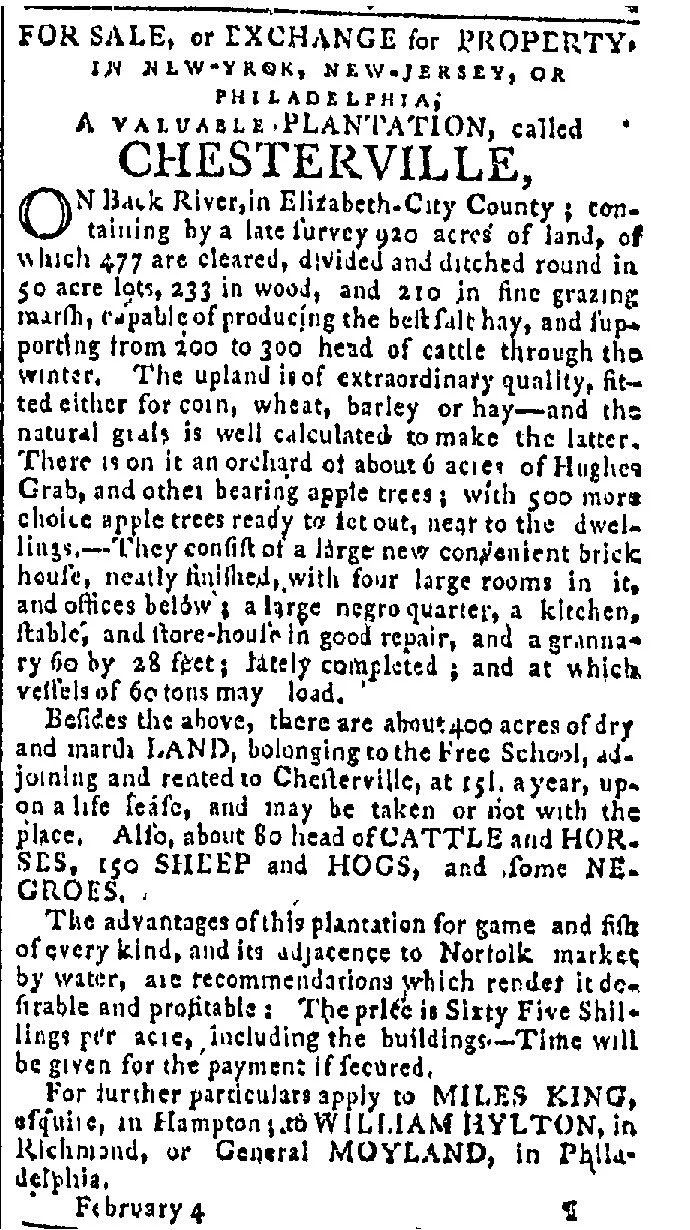
Ad ad listing for Chesterville, circa 1792. Wythe moved to Richmond in 1788 and continued to operated the property as a plantation until 1792.
One of the most recognizable names we see in the Elizabeth City Vestry Records is George Wythe. Wythe was a the preeminent Virginia signer of the Declaration of Independence, and was recognized as one of the most important legal minds in the colony of Virginia. The first law professor in the 1779, at William & Mary, Wythe taught future leaders Thomas Jefferson, John Marshall, Henry Clay, and a host of others (including St. George Tucker, from whose seed a host of Episcopal clergy are descended) and Bushrod Washington.
Wythe was born in 1726, the second son of Thomas Wythe, III, and Margaret Walker Wythe, and grew up on the family plantation called Chesterville. Wythe’s father was a member of the House of Burgesses. When died in 1729, the property passed to Thomas IV, George Wythe’s elder brother. The plantation passed to George in 1755 when Thomas IV died.

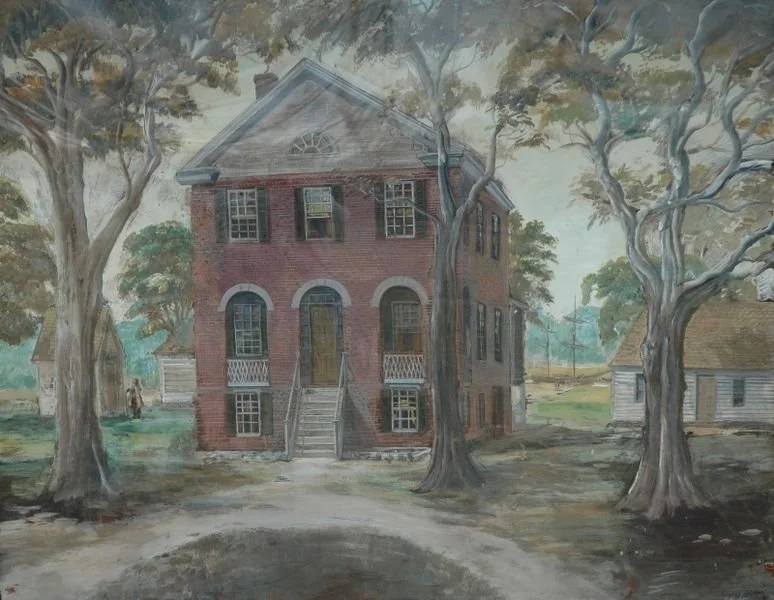
George Wythe built this house in 1771.
George Wythe buit the house in 1771.
Alderman Williamsburg for 18 years, elected HOB, became clerk of the House from 1768 to 1775. Delegate to 2nd CC in May 1776 (?) where he signed the DOI. After his first wife's death George Wythe lived on the property from 1748-1755.
When the state courts moved to Richmond in 1788, Chancellor Wythe followed, but he continued to operate the property as a plantation until 1792.
George Wythe purchased surrounding farms, and by 1771 held 1050 acres of land. He grew tobacco, corn, wheat, and barley. He also raised livestock including cattle, and maintained apple and pear orchards. During the Revolutionary War, his overseer Hamilton St. George proved to be a spy, giving the British information and supplies from Chesterville.
The Wythe name is noted several times in the Elizabeth City Vestry Records, mostly as landowners in processioning records, but occasionally as an eminent lawyer, sought out to bring cases on behalf of the Vestry in Chancery court.
The pages below show these intstances.